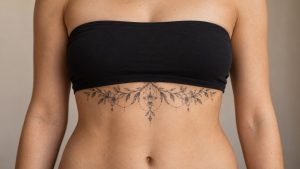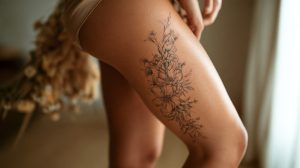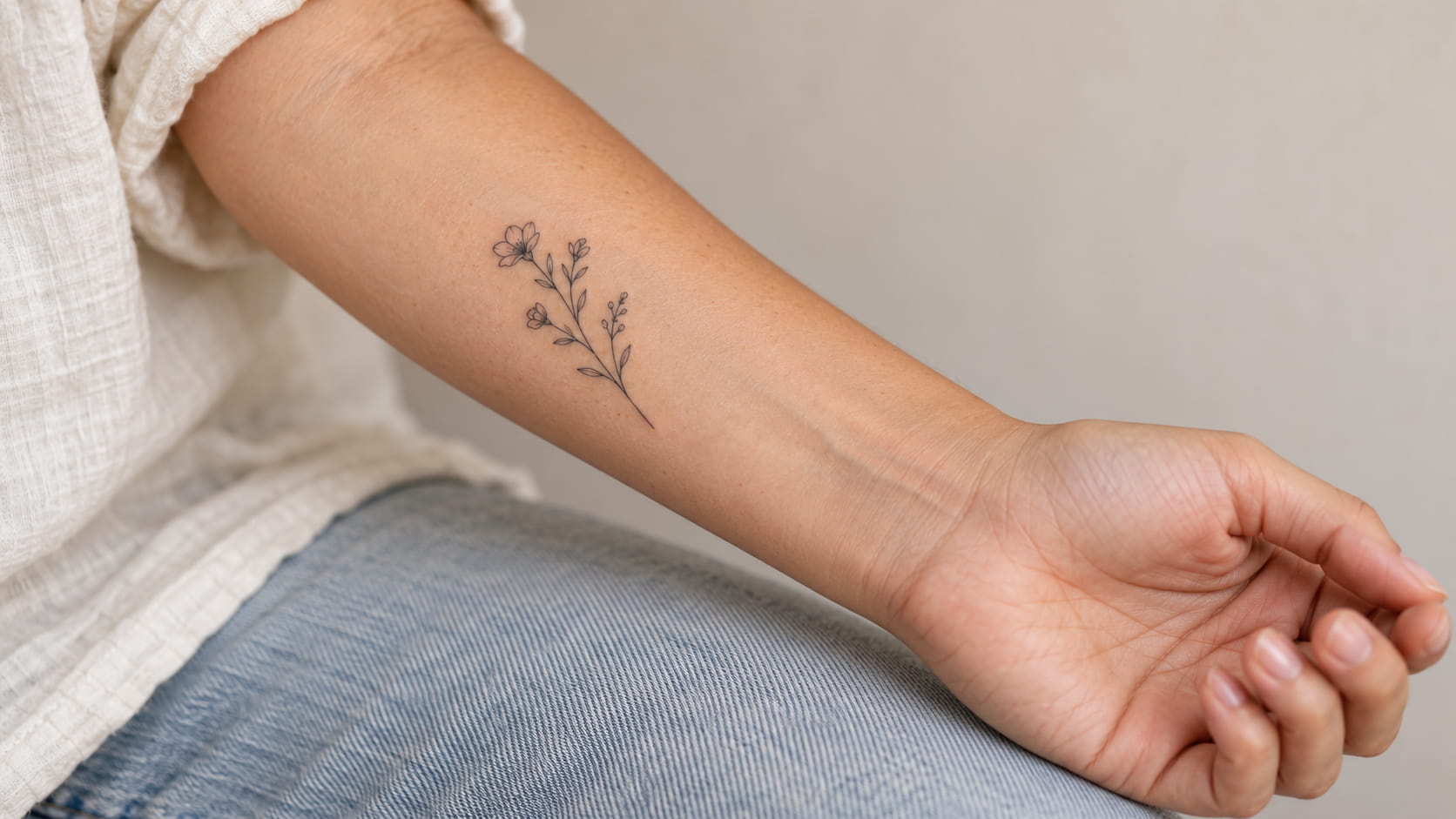
Walking into a tattoo studio for your very first session is an unforgettable rite of passage. In over a decade behind the chair, I have welcomed hundreds of first-time clients through our studio doors. There is always a palpable mix of nervous excitement, endless questions about pain, and a genuine desire to choose something that will still look beautiful decades down the road. Exploring curated beginner tattoo ideas is not about settling for something generic. It is about understanding how scale, line weight, and anatomical placement work together to ensure a comfortable first appointment and an effortless healing journey.
The secret to a successful first tattoo lies in restraint. First-timers often fall into one of two traps: either choosing a design so microscopically tiny that the ink blurs into an unrecognizable dot over time, or attempting a massive, multi-session back piece before understanding their personal pain threshold. The sweet spot for beginners is a clean, intentional motif sized between two and four inches, placed on a low-sensitivity anatomical canvas like the outer forearm, bicep, or upper calf. Below, I have compiled 15 studio-tested beginner tattoo ideas, complete with design concepts, ideal low-pain placements, and professional advice to make your first tattoo experience seamless and empowering.
01. Single-Needle Botanical Olive Sprig
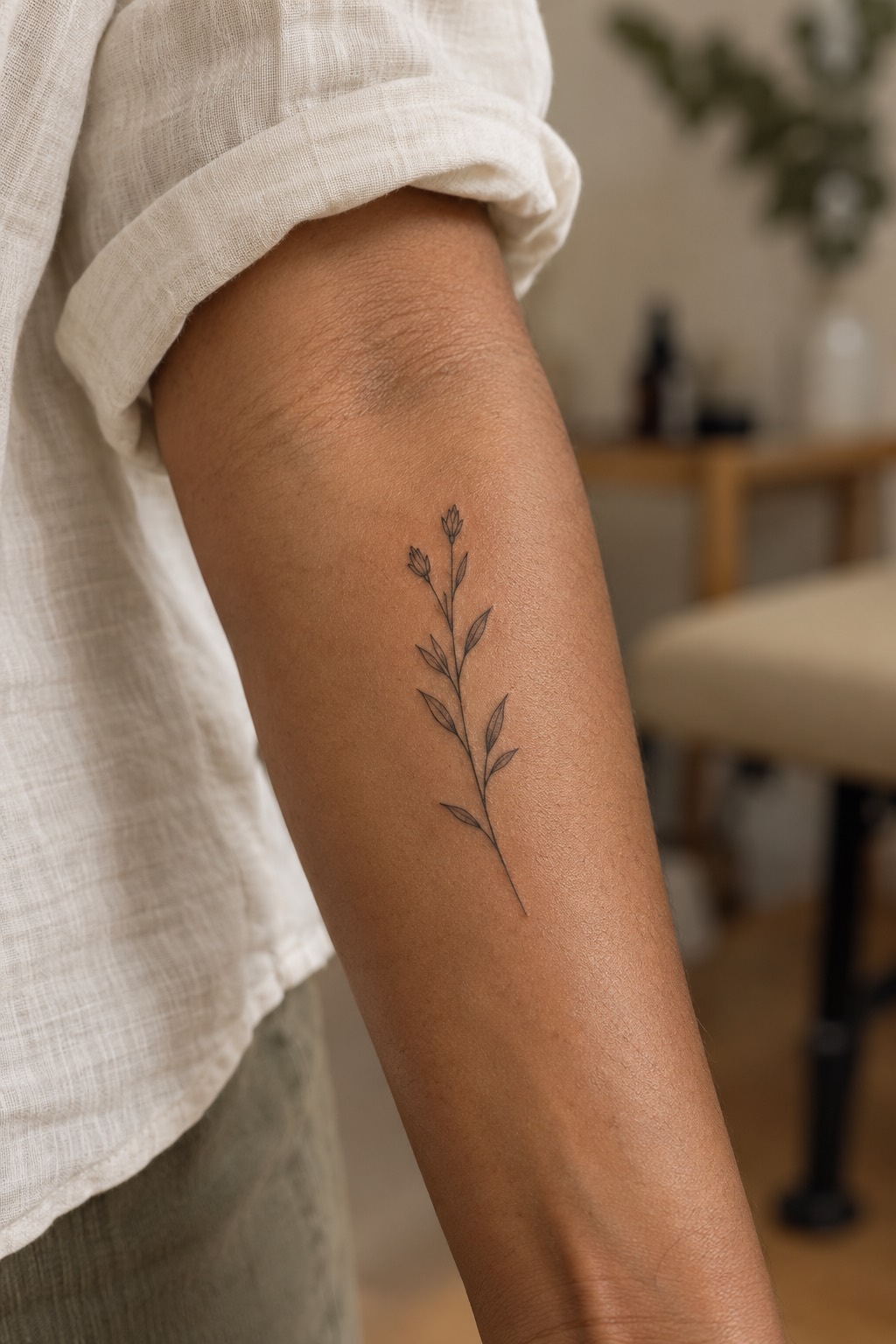
If you are stepping into a studio for the first time, a delicate botanical sprig is one of the most forgiving and timeless options. Olive branches represent peace, victory, and resilience. Rendered with fine-line precision, the gentle curve of the stem follows the natural musculature of your arm, making it look tailored rather than stamped on. Because it requires zero heavy black filling, the session is brief, gentle, and heals with remarkable speed.
- Design Concept: A slender olive branch with asymmetrical leaves and micro botanical fruit accents rendered in crisp fine lines.
- Ideal Placement: Inner or outer forearm, angled naturally along the line of the radial bone.
- Artist Technique: We use a tight 3RL needle grouping running at medium voltage. Lines are kept intentional without overworking the skin, ensuring the leaves maintain clean separation as the ink settles.
02. Minimalist Star Constellation and North Star
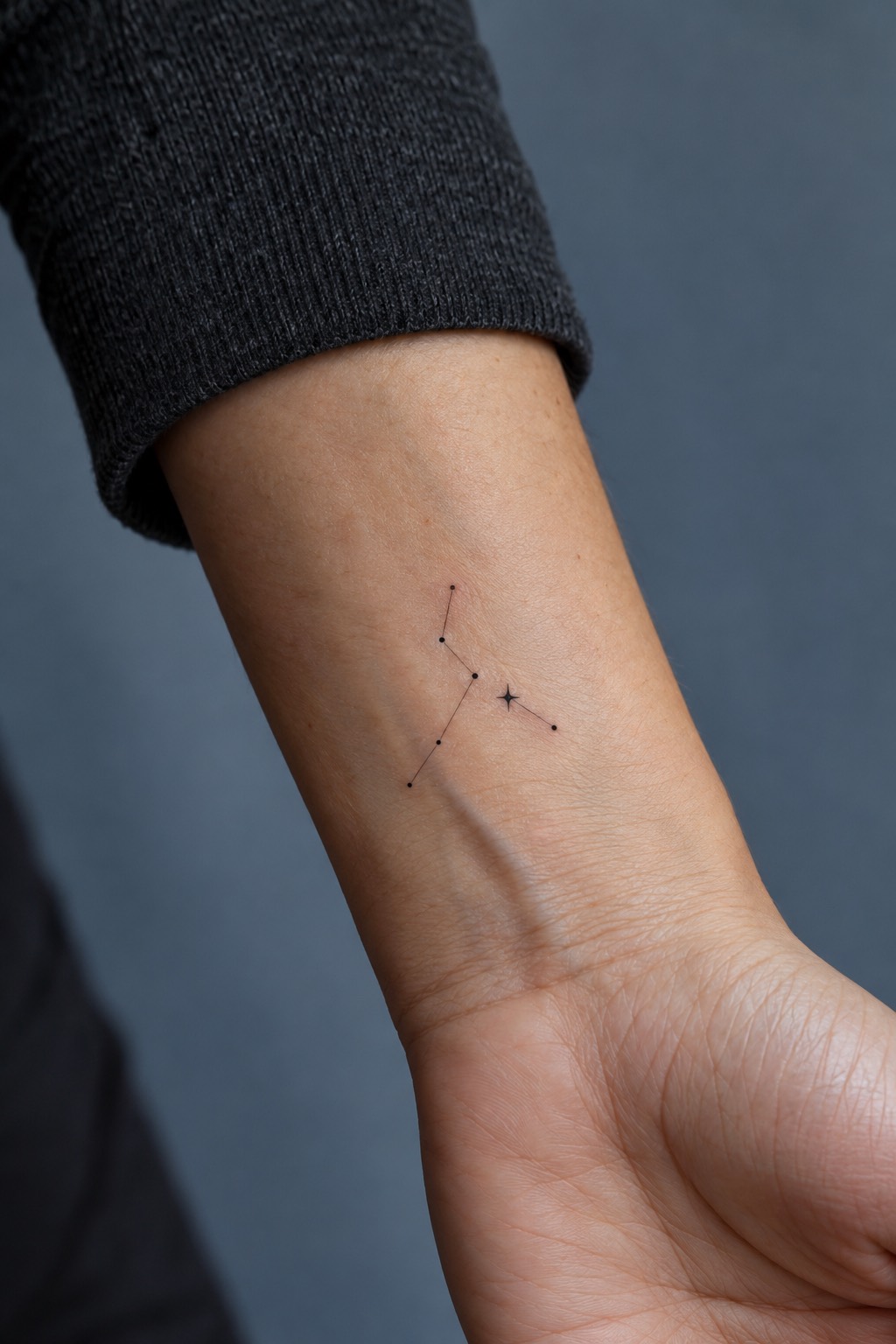
Connecting celestial points to create personal zodiac constellations or navigational star maps is an elegant way to carry meaning without visual clutter. A four-point North Star acts as the focal anchor, connected by microscopic stippled lines to smaller orbiting stars. The airy composition breathes naturally on the skin, looking like an intentional piece of fine jewelry.
- Design Concept: A personalized zodiac or celestial constellation featuring a primary four-point starburst and micro dotwork connectors.
- Ideal Placement: Outer forearm, upper shoulder, or just above the wrist crease on flat skin.
- Artist Technique: Dots are applied with a 1RL needle using deliberate single-puncture precision rather than drag lines. This prevents micro dots from expanding into blurry blotches over years of sun exposure.
03. Continuous Single-Line Abstract Contour Face
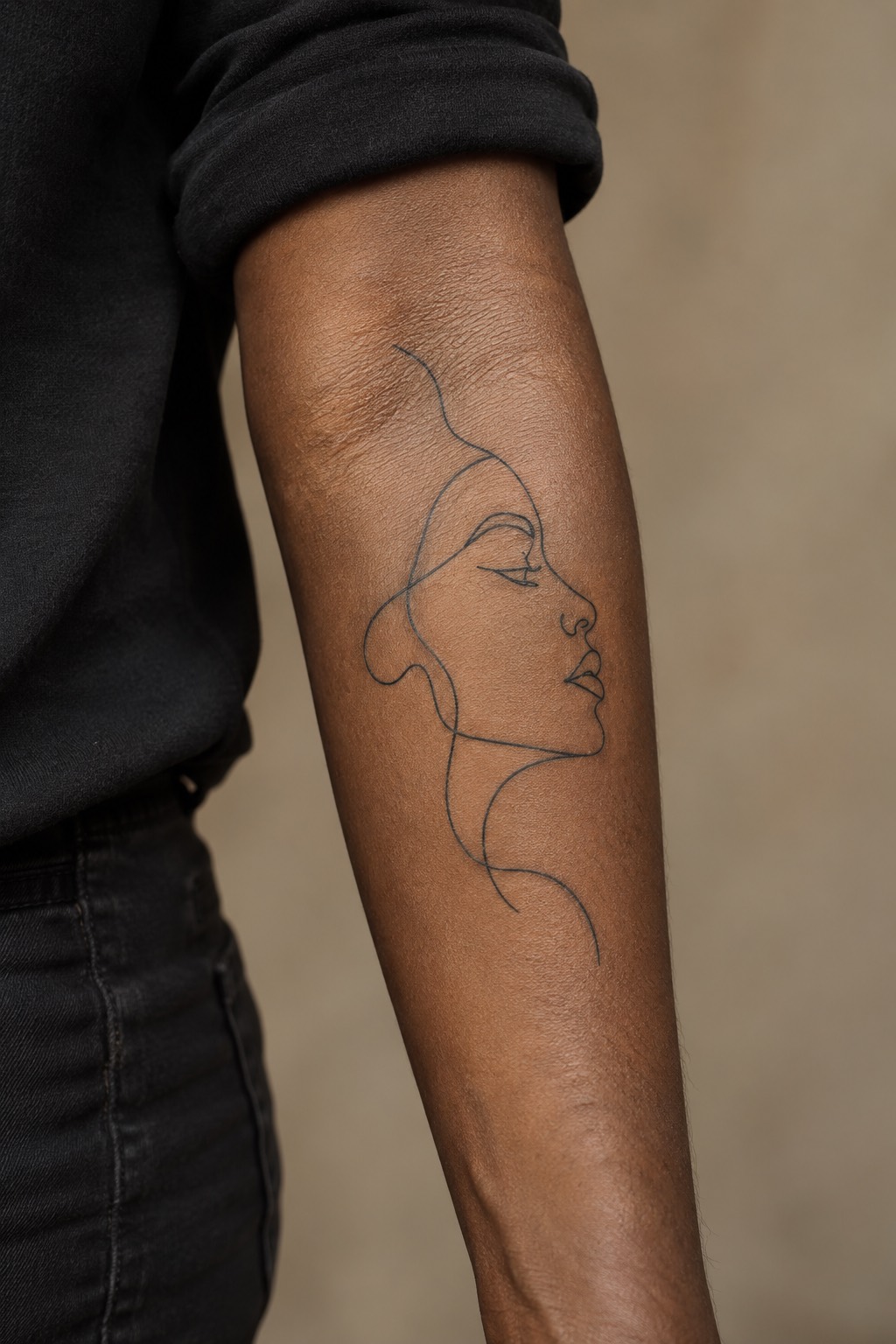
Inspired by the modernist sketches of Picasso and Matisse, single-line contour art uses one unbroken line to define a human profile, interlocking hands, or a serene face. It feels deeply artistic and understated. Because there is no shading or color fill, the appointment rarely exceeds 45 minutes, making it ideal for testing your personal pain threshold.
- Design Concept: An unbroken continuous fluid line drawing capturing the graceful profile of a face resting in quiet contemplation.
- Ideal Placement: Outer bicep, inner forearm, or centered on the upper back beneath the neck.
- Artist Technique: Executed with a standard 5RL for consistent, visible line thickness. The artist maintains uniform hand speed and steady dermal depth so the continuous line stays perfectly even from start to finish.
04. Minimal Geometric Mountain Peak and Pine Tree
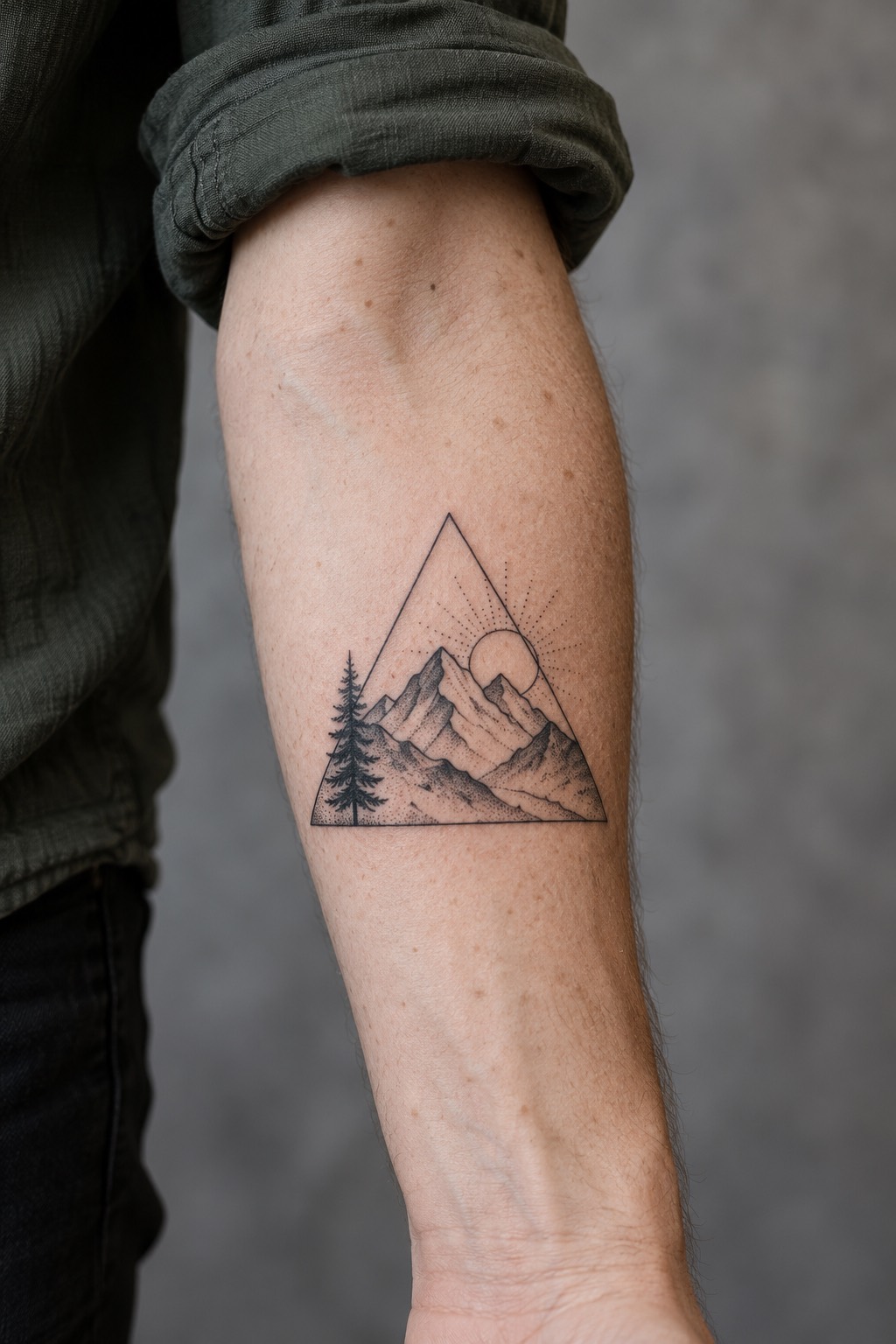
For outdoor enthusiasts and lovers of wilderness, simple geometric landscapes capture grand adventure in a compact footprint. Sharp angular mountain peaks paired with a clean solitary pine tree evoke memories of crisp alpine air and personal grounding. Framed within an open circle or clean triangle, it possesses architectural balance that never goes out of style.
- Design Concept: Sharp geometric mountain ridges with subtle cross-hatching, accented by a silhouetted pine tree inside an open circular frame.
- Ideal Placement: Upper outer forearm or the lateral calf where the flat muscular plane maintains straight geometric lines.
- Artist Technique: We use a 5RL needle for the circular perimeter and a fine 3RL for interior tree needles and ridge shading. Leaving open skin highlights along mountain crests produces crisp contrast.
05. Ascending Flock of Flying Birds Silhouette
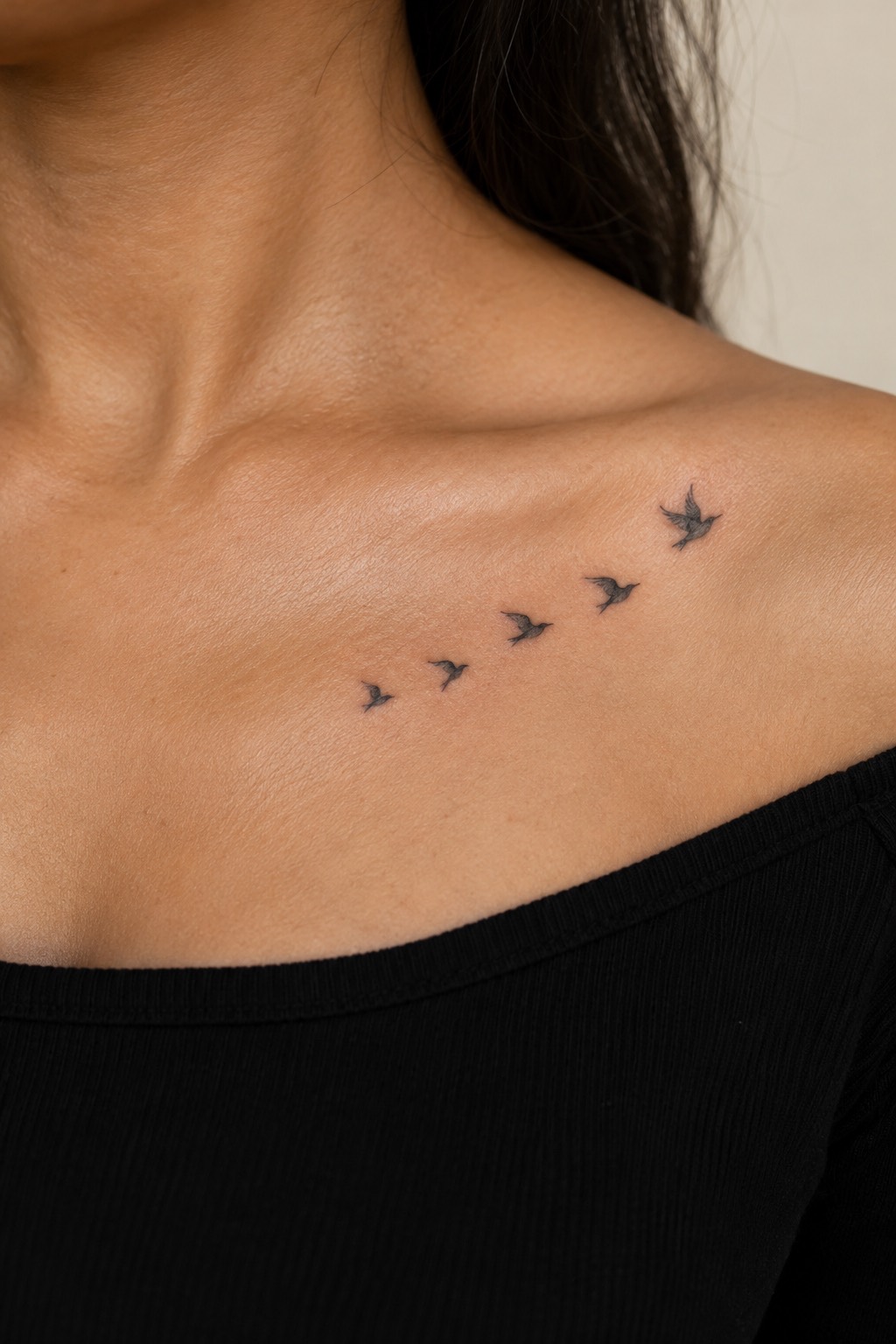
Symbolizing liberation, travel, and personal independence, a small flock of birds in mid-flight creates graceful kinetic movement. By varying the size of each bird as they drift upward, the design creates an illusion of perspective and horizon. It feels weightless, moving fluidly with the natural gesture of your body.
- Design Concept: A trio or quartet of miniature silhouettes depicting swallows or geese ascending diagonally into open sky.
- Ideal Placement: Following the gentle slope below the collarbone, across the shoulder blade, or along the lower forearm.
- Artist Technique: Each bird silhouette must be distinct. Rather than solid black blobs, we define individual wing bends and tail feathers using a tight 3RL, avoiding premature ink spread.
06. Micro Crescent Moon with Stippled Halo Glow
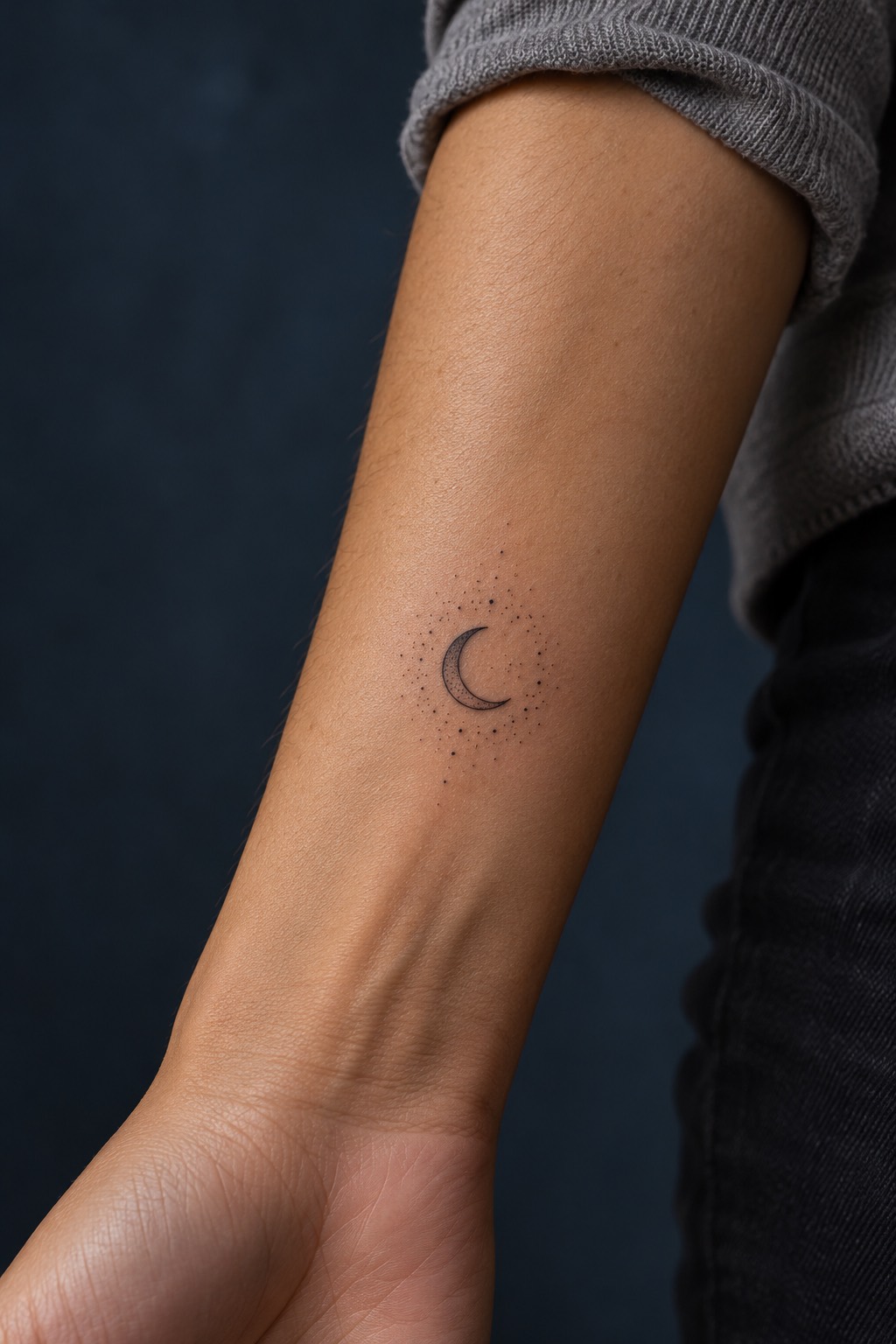
The moon is a classic studio request for first-timers due to its universal resonance with intuition, natural cycles, and quiet strength. A slim crescent moon paired with a soft stippled pointillist halo feels far more sophisticated than a heavy black stamp. Its modest footprint allows you to place it discreetly almost anywhere on the body.
- Design Concept: A crisp fine-line lunar crescent framed by an outer halo of micro dotwork stars and soft celestial glow.
- Ideal Placement: Behind the shoulder, side of the ribcage, or just above the outer ankle bone.
- Artist Technique: Precision is essential when pulling small curved arcs. We pull the outer crescent in one smooth motion using a 3RL bugpin, then softly pepper the halo dots with diluted black wash.
07. Clean Typography Roman Numeral Date
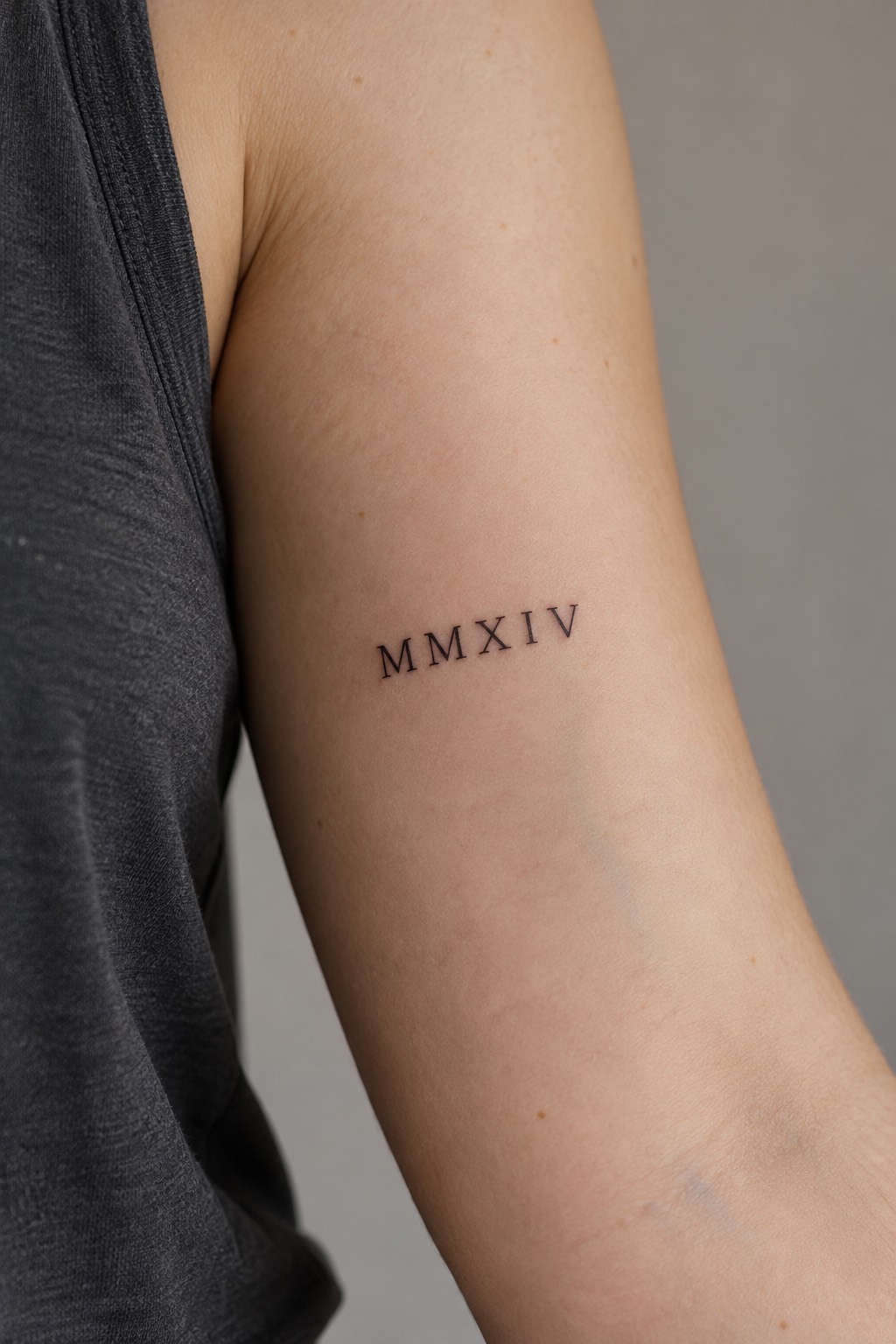
Commemorating a milestone birthday, an anniversary, or a transformative year with Roman numerals is an enduring first-tattoo tradition. The structured architectural serifs and clean vertical strokes give historical gravitas to personal memories. It looks refined, reading as an abstract graphic pattern to strangers while holding intimate meaning for you.
- Design Concept: Crisp, typographic Roman numerals with proportional kerning and subtle serif terminals.
- Ideal Placement: Inner bicep, along the collarbone, or horizontal across the forearm.
- Artist Technique: We print multiple font sizes and test them against the client natural arm hang before stenciling. Lines are pulled with a steady 5RL, paying close attention to parallel vertical spacing.
08. Fine-Line Symmetrical Butterfly Silhouette
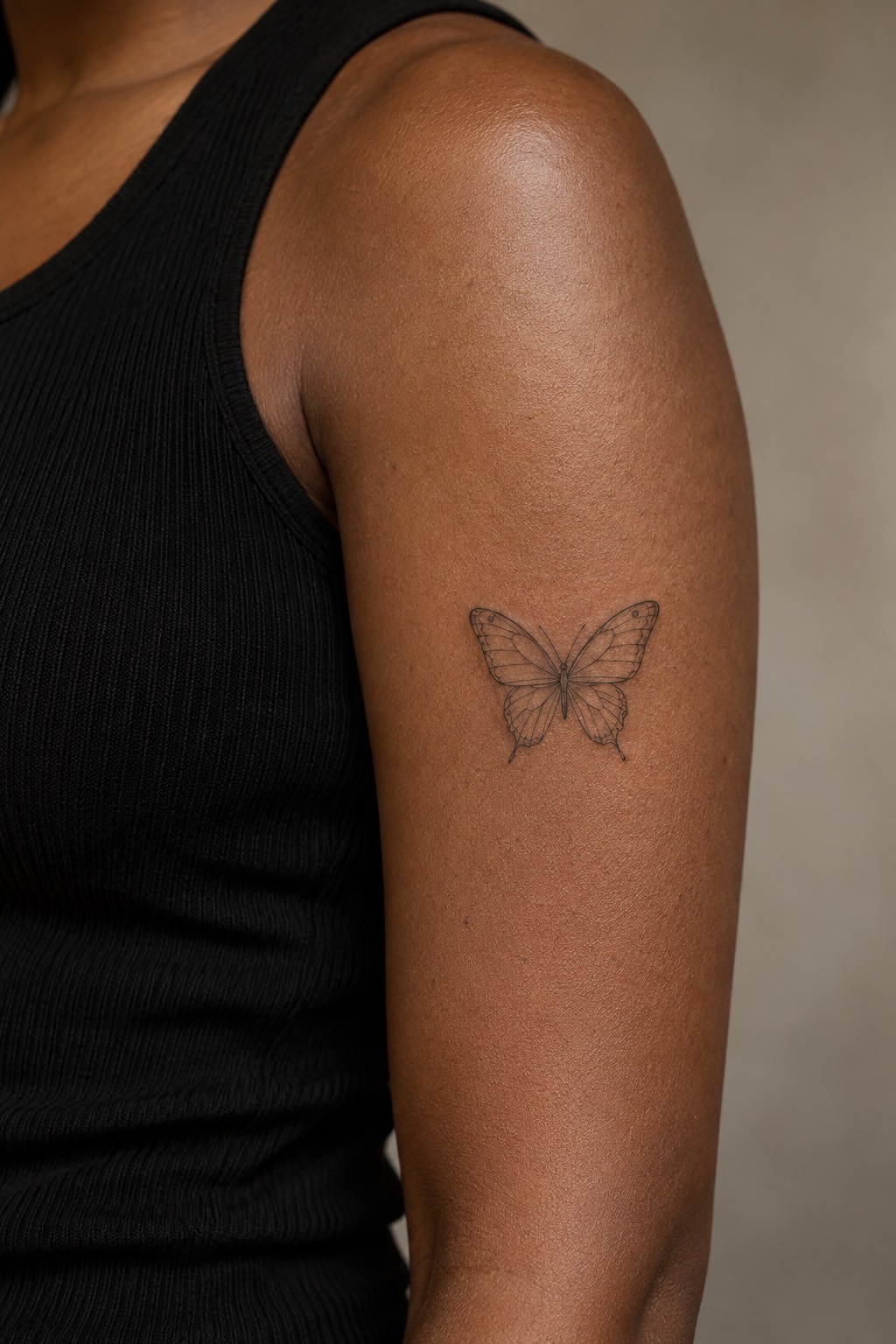
Butterflies represent metamorphosis, personal reinvention, and beauty emerging from patience. A centered, fine-line butterfly with delicate wing venation delivers high visual payoff with minimal skin trauma. Its balanced symmetry looks striking on muscle centers, making it one of the most requested and satisfying entry-level tattoos in our studio.
- Design Concept: A top-down symmetrical butterfly with botanical-inspired wing patterns, antenna frills, and negative space breaks.
- Ideal Placement: Center outer bicep, upper forearm, or center upper back between the shoulder blades.
- Artist Technique: Bilateral symmetry requires rigorous stencil placement. We use a 3RL for outer wing perimeters and drop to a 1RL for the gossamer internal wing veins, ensuring crisp long-term legibility.
09. Miniature Paper Origami Crane
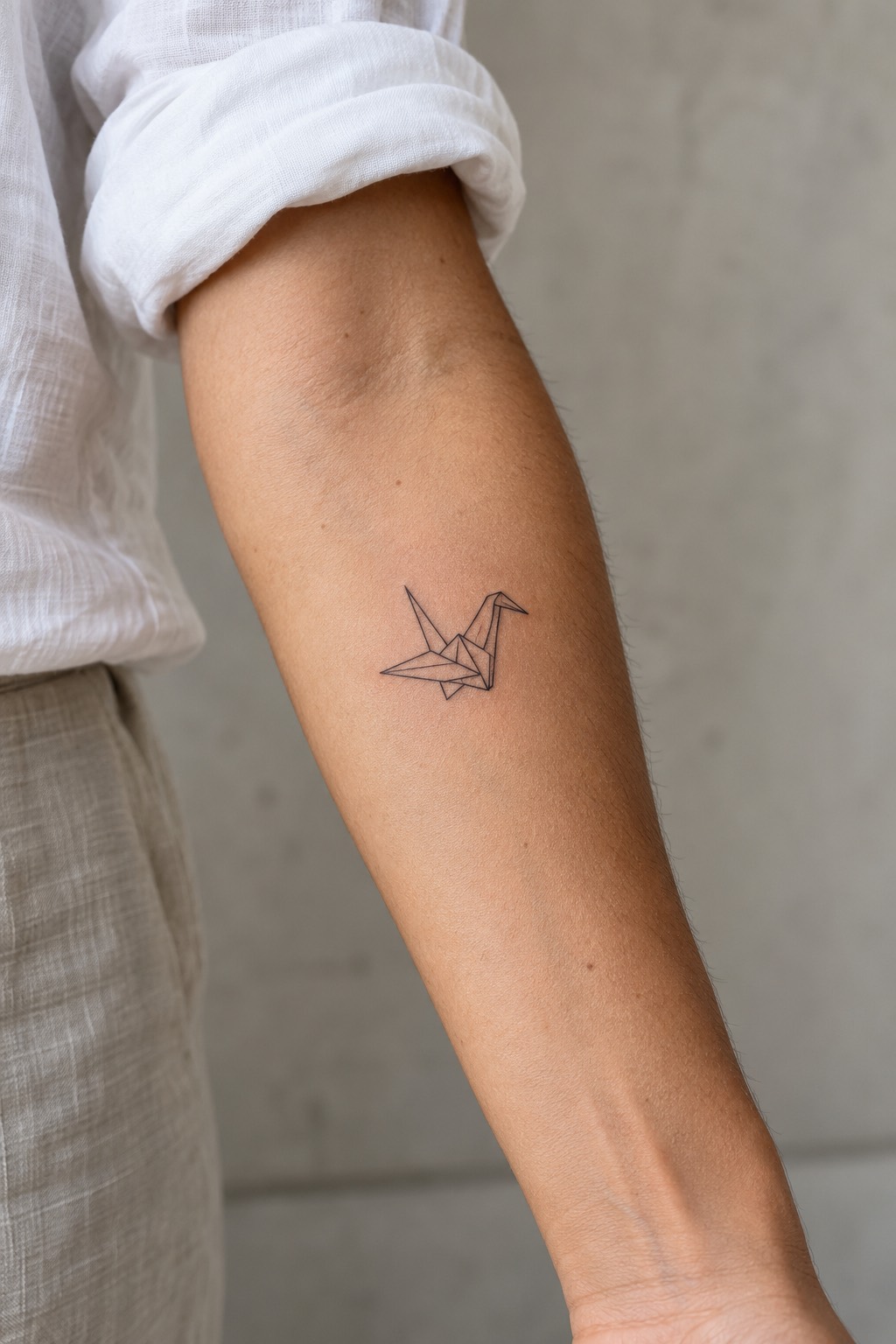
Origami cranes carry rich cultural symbolism of peace, hope, healing, and good fortune. Translating the sharp geometric folds of folded paper into clean black ink lines results in a modern, charming piece that feels lighthearted yet deeply intentional. The straight diagonal creases provide satisfying visual structure.
- Design Concept: A delicate geometric paper crane captured in flight, featuring crisp geometric creases and subtle paper-fold shadows.
- Ideal Placement: Inner wrist, outer ankle, or inner forearm.
- Artist Technique: Geometric folds rely on sharp corners. We stop and restart line pulls cleanly at intersection points with a 3RL, avoiding sloppy overlapping needle crossbars.
10. Dainty Single-Stem Lavender Sprig
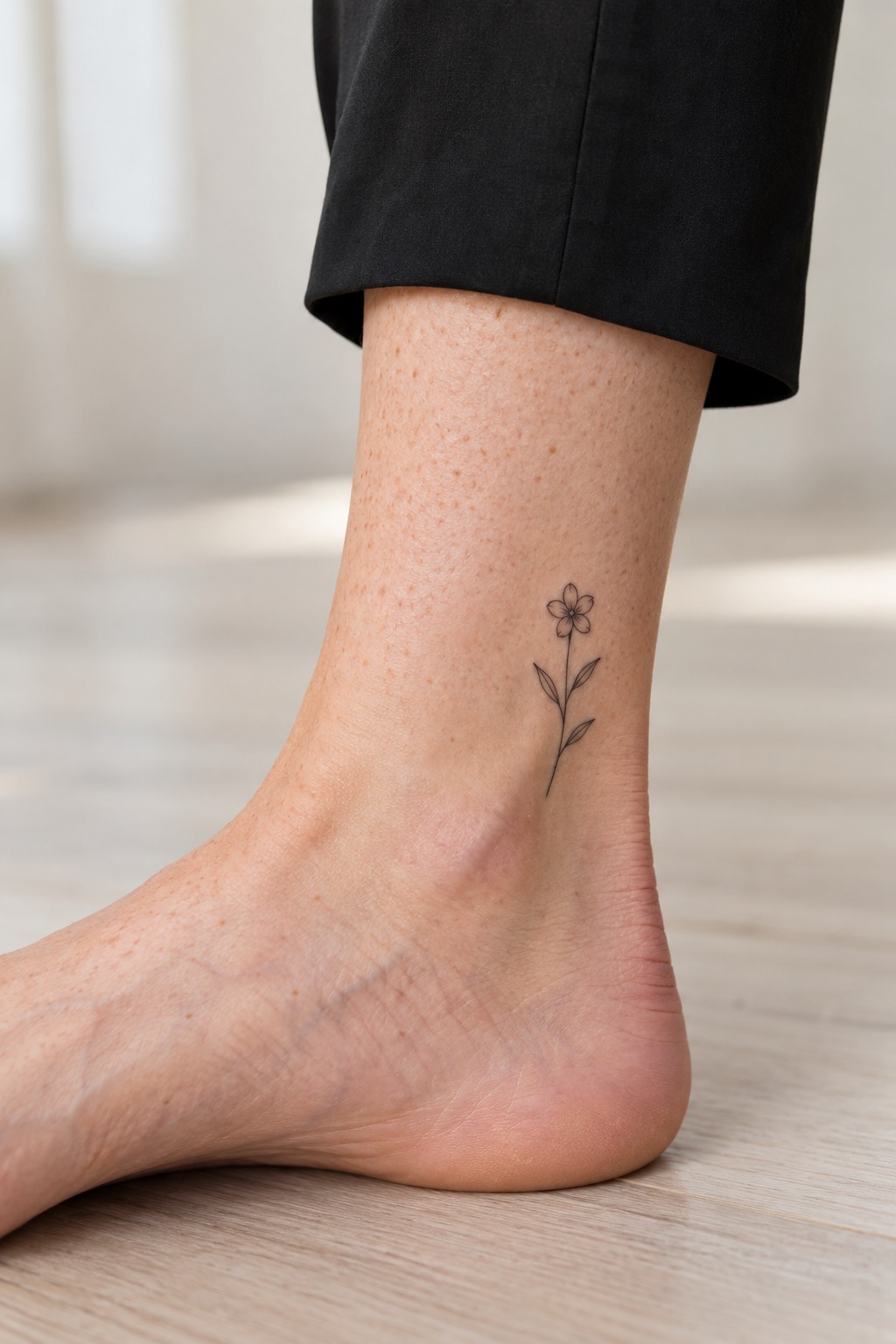
Lavender has long been celebrated for its calming aromatics and soothing presence. As a tattoo, a solitary lavender stem with clustered micro buds creates a soft, poetic accent. Whether executed in pure black and grey wash or accented with faint violet drops, it hugs the natural contours of the body with effortless grace.
- Design Concept: A slender botanical stalk with tiny clustered lavender florets and tender paired leaves.
- Ideal Placement: Above the ankle bone, on the outer forearm, or following the side of the wrist.
- Artist Technique: We deposit tiny dots for the flower buds using varied needle pressure. Soft grey wash adds dimension without muddying the small floral clusters.
11. Circular Minimalist Ocean Wave Crest
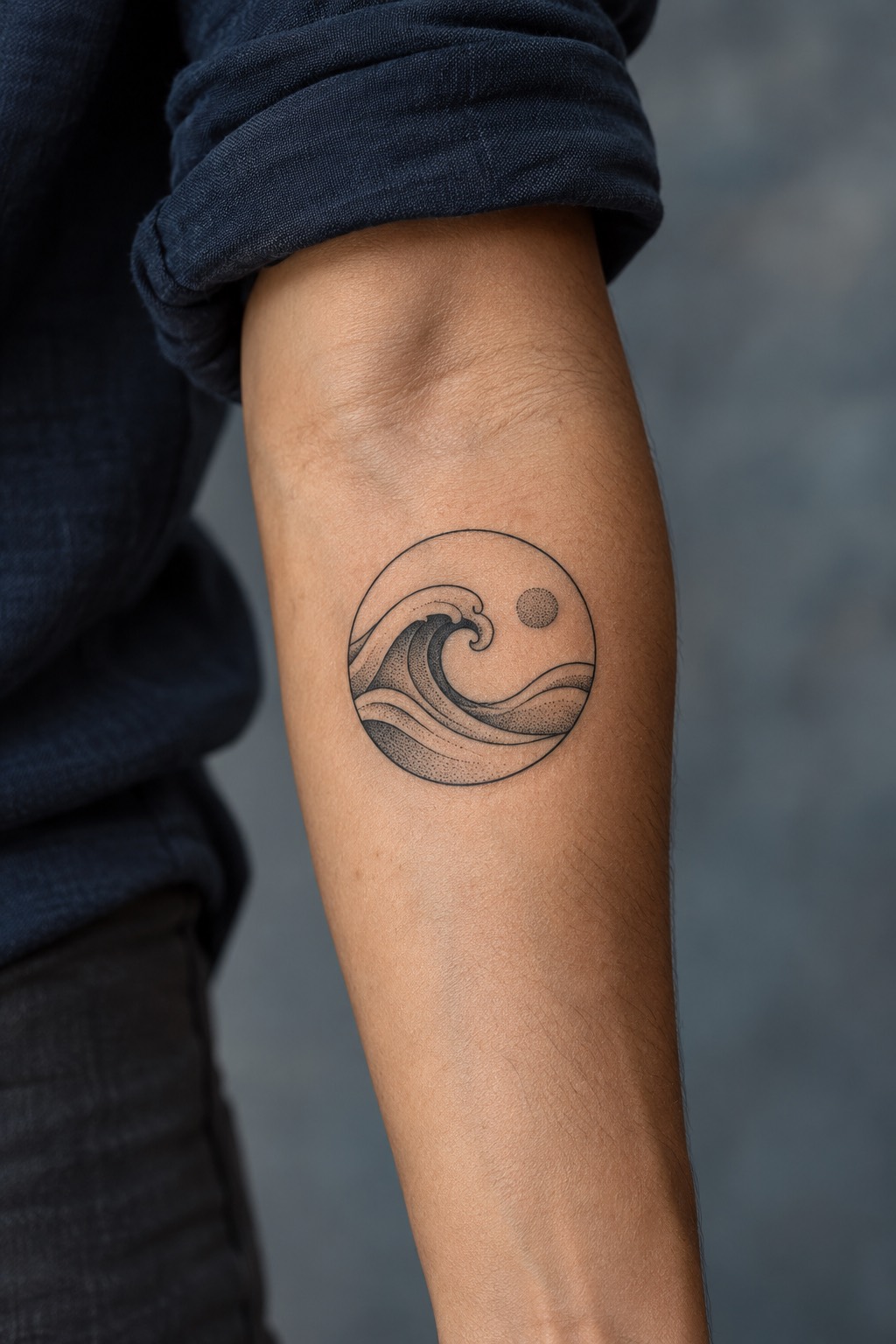
Water represents adaptability, emotional depth, and constant renewal. A minimalist curling wave contained within an open circular or semicircular crest brings graphic power to a small area. The contrast between the curling breaker and the calm negative space below makes it an instant classic for anyone drawn to the sea.
- Design Concept: A stylized Japanese-inspired curling wave crest framed cleanly within a partial circular boundary.
- Ideal Placement: Inner wrist, outer bicep, or upper calf.
- Artist Technique: Executed with a 5RL for the structural wave curve and a 3RL for fine spray droplets. Leaving generous skin breaks ensures the water looks luminous and clear.
12. Geometric Minimalist Sunburst Arc
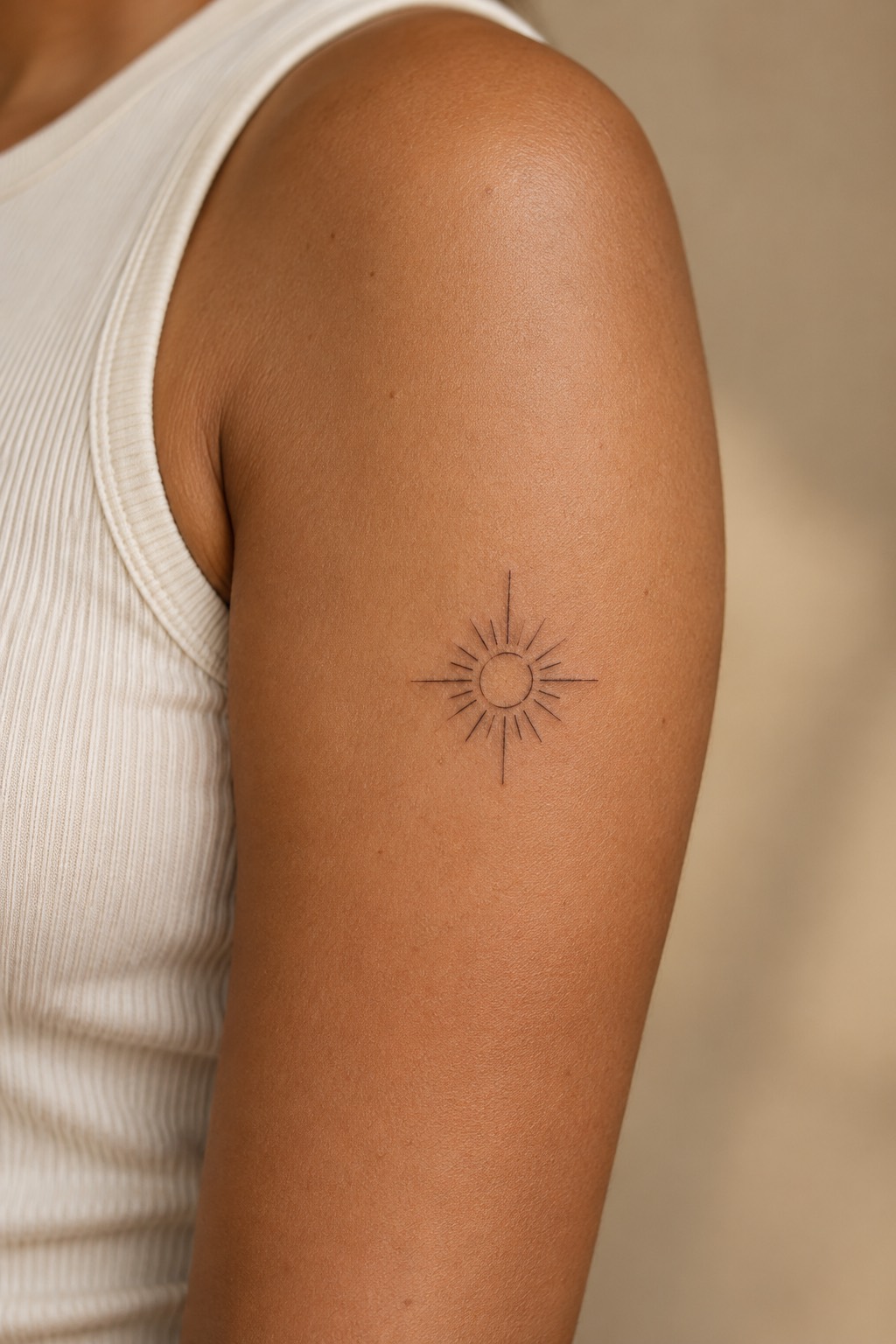
A rising sunburst arc evokes morning optimism, warmth, and fresh beginnings. Instead of a full circular disc, an arched half-sun with radiating linear rays hugs natural body curves such as the wrist or collarbone. It is quick to complete, virtually painless in low-nerve areas, and universally recognized for its uplifting symbolism.
- Design Concept: A minimalist half-circle horizon with graduating straight and dotted sunbeams radiating outward.
- Ideal Placement: Lower forearm above the wrist crease, upper chest below the clavicle, or back of the arm above the elbow.
- Artist Technique: Ray lines must be perfectly straight and evenly spaced. We use a compass-drawn stencil guide and pull the rays outward from the center hub with a crisp 3RL needle.
03. Micro Four-Leaf Clover with Fine-Line Stem
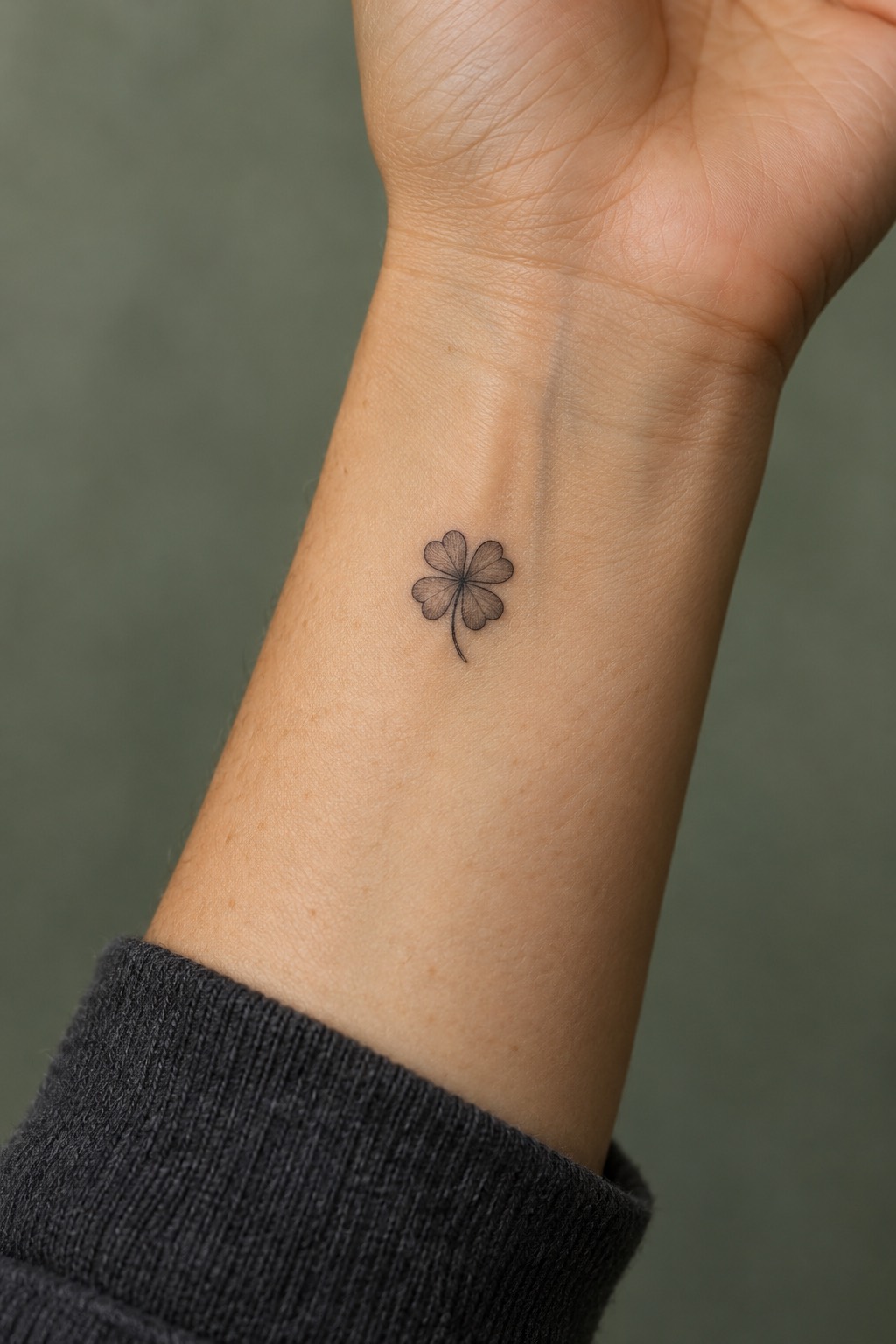
Carrying a permanent charm for good fortune and serendipity, a micro four-leaf clover is sweet, subtle, and quick to tattoo. Each heart-shaped petal represents faith, hope, love, and luck. Keeping the scale dainty and the lines whisper-thin ensures the motif remains sophisticated rather than cartoonish.
- Design Concept: Four delicate heart-shaped clover leaves meeting at a central point, anchored by an organic curved stem.
- Ideal Placement: Side of the finger, inner wrist, or just behind the ear.
- Artist Technique: On tiny scales under one inch, needle depth must be conservative. We use a tight 1RL or 3RL bugpin with gentle hand pressure to prevent the micro lobes from bleeding into a solid patch.
14. Minimalist Botanical Eucalyptus Leaves
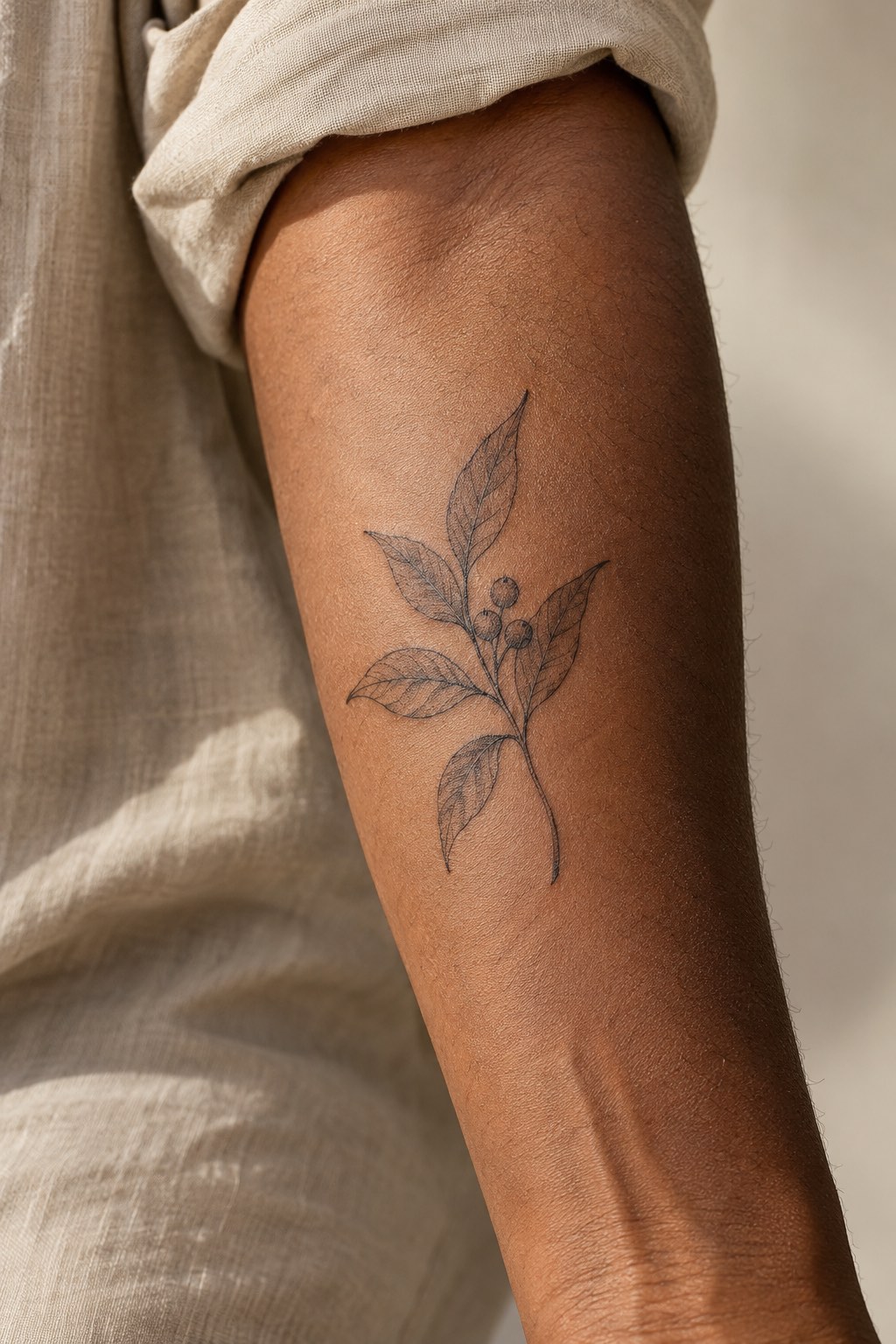
Eucalyptus leaves have become a modern design staple thanks to their rounded, silver-dollar shapes and calming botanical balance. Alternating round leaves along a curved central twig creates a soothing visual rhythm that wraps around the wrist or traces the collarbone. It delivers clean organic beauty without the fragility of petals.
- Design Concept: A curved eucalyptus branch featuring rounded, overlapping coin leaves with delicate central leaf veins.
- Ideal Placement: Forearm, outer shoulder, or along the lower calf.
- Artist Technique: We leave subtle negative skin breaks where leaves overlap to create depth without relying on heavy dark shading. Executed with a 3RL for crisp, long-lasting lines.
15. Interlocking Minimalist Circles
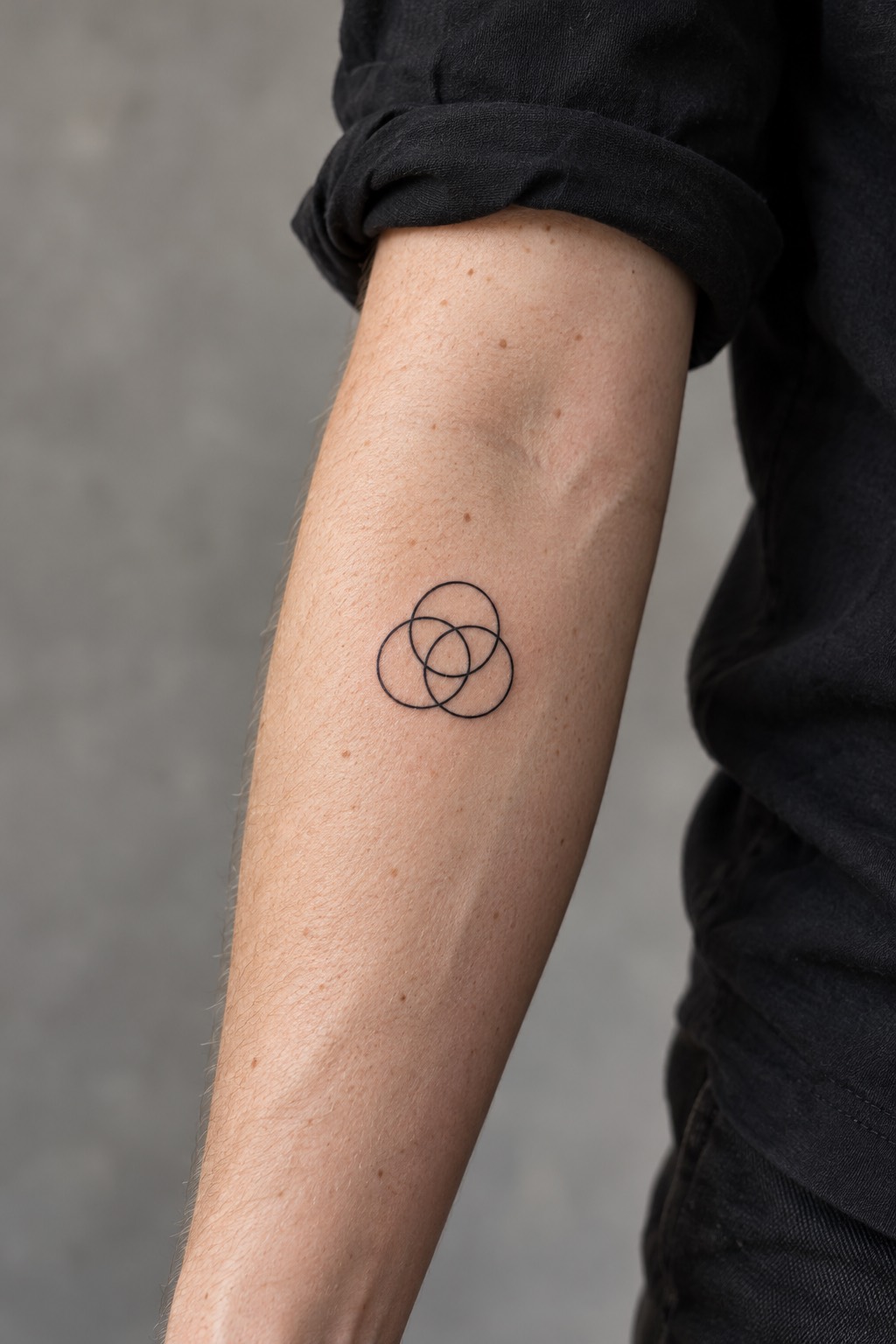
Pure geometric abstraction at its most elegant. Two or three thin interlocking rings represent unity, unbreakable connection, and infinite love between family, partners, or friends. The stripped-back geometry carries profound personal meaning without needing literal words or ornate embellishments.
- Design Concept: Two interlocking fine-line circles of equal diameter, forming a balanced vesica piscis overlap in the center.
- Ideal Placement: Inner forearm, upper outer arm, or nape of the neck.
- Artist Technique: Circles on curved human limbs are notoriously challenging. The artist must apply the stencil while the client stands with muscles relaxed, then pull the rings with fluid, confident 5RL strokes.
First-Timer Anatomy: Ranking Low-Pain Studio Placements
Pain is naturally the number one concern for clients booking their first piece. While everyone experiences sensation differently, human anatomy provides reliable guidelines for where the needle feels most manageable:
- Outer Forearm and Outer Bicep (Pain Level: 2 to 3 out of 10): These are the gold standards for first-timers. The muscle tissue is thick, nerve endings are relatively sparse, and the skin is flat and stable. Most clients compare the sensation to a mild cat scratch or vibrating warmth.
- Upper Outer Thigh (Pain Level: 3 out of 10): The quad and outer thigh provide a large, fleshy cushion that absorbs machine vibrations easily. It is an ideal placement if you want a slightly larger piece for your first session without enduring intense discomfort.
- Upper Outer Shoulder and Scapula (Pain Level: 3 to 4 out of 10): Away from the immediate collarbone, the fleshy muscle cap over the deltoid and shoulder blade is comfortable to tattoo, easy to care for, and simple to conceal under everyday work shirts.
- Areas to Avoid for Your First Session: Steer clear of the ribs, sternum, spine, fingers, feet, and inner elbow ditch for your debut piece. These zones have thin skin directly overlying bone and a high concentration of sensitive nerve endings.
The Golden Rules of Longevity: Sizing, Blowouts, and Day-One Aftercare
A tattoo is a living collaboration between ink pigment and your immune system. Understanding how skin ages prevents the most common beginner regrets:
- Beware of the Micro-Tattoo Trap: Social media is flooded with microscopic tattoos the size of a dime. While they look crisp the day they are finished, all tattoo ink spreads microscopically in the dermis over the years. If lines are placed less than one millimeter apart, they will eventually merge together into a dark smudge. Trust your artist when they recommend sizing a design up slightly to ensure long-term clarity.
- Preventing Blowouts with Proper Needle Depth: A blowout occurs when an inexperienced artist presses too deep, depositing ink into the subcutaneous fat layer where it spreads like water on a paper towel. Choose a licensed studio professional with a proven portfolio of healed fine-line work to guarantee crisp, clean edges.
- Flawless First-Week Healing Protocol: Leave medical-grade protective film on for 3 to 4 days as directed by your artist. Once removed, wash your tattoo twice daily using lukewarm water and gentle, fragrance-free liquid soap. Pat completely dry with a clean paper towel and apply a micro-thin layer of unscented water-based lotion. Never scratch healing flakes or submerge your fresh ink in baths, pools, or ocean water.